
Brand before Marketing – always…

Happy New Year, and welcome to my second ever marketing blog, and the first for 2026. I have to tell you, I’m excited about this year – it feels different already, I can’t explain why but I have such a good feeling about the year ahead and feel more than a little ‘fizzy’ in my tummy. For someone who has lived her whole life in the flow, guided by gut feel, I pay attention to this feeling.

Here’s hoping we all enjoy the best year ever.

So, onto the topic of the month – my particular passion and the constant core of every piece of work I produce – brand.

Brand is the anchor, ensuring a business is tethered to its purpose, preventing drift.

Brand is the heartbeat driving every decision.

Brand is the lens that frames every initiative.

It’s the unseen thread, the grounding force, the calm at the centre of all activity.

In short, everything begins and ends with brand, informing every decision, big and small. Your brand is your story.

The Daily Brief beautifully describes how “Before logic enters the room, branding has already done its job.” Though, personally, I would say the ‘brand’ has done its job, rather than the “branding”.


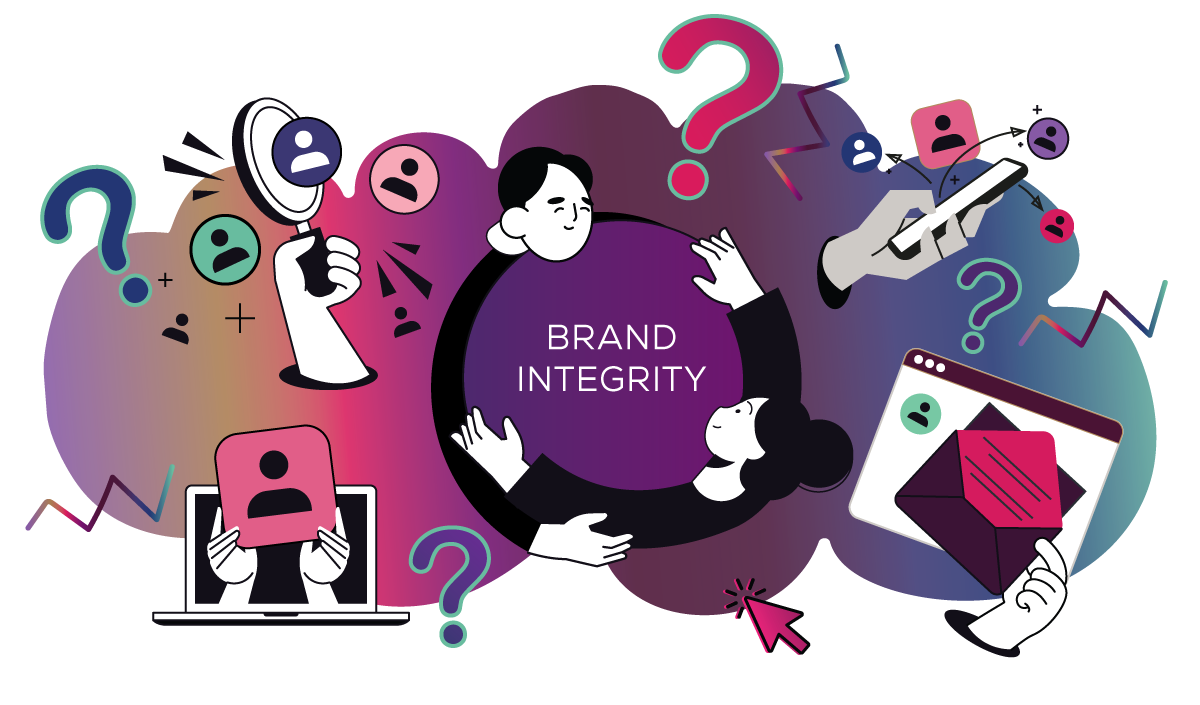
Lately, I’ve seen a lot of posts on LinkedIn about this very subject, often coming from a similar angle to what I’ve described above. Now, I appreciate that opinions vary on all things, but rarely have I seen such vehement, if not scathing opposition from the ‘Marketing before Brand’ advocates. I won’t go into detail, but the summary argument for the marketing-first contingent, was about how marketing establishes the strategy, the market positioning, the customer profile, etc. etc., and this must happen before the brand can be designed. In my opinion (seemingly shared by many) they are missing the point, designating brand creation and development as purely a design / creative function. But without first establishing the brand’s raison d’etre and brand strategy, any ‘marketing’ endeavours have no soul or substance. Essentially, brand and marketing should walk together in harmony - it’s not a competition, but a union (albeit, led by brand).

If a business is not working, a product not selling, it’s rarely a marking problem – it’s almost certainly a brand problem. Marketing without first getting under the skin of a brand and building its heart and soul is simply noise – in an already deafening environment. It has no chance. The only way to achieve enduring cut through is with a business or a product that touches people and really means something to them. Then your marketing is amplifying the right message and values that will attract and connect with the right audience.

There are arguably some exceptions, of course – typically single, innovative products that hit the right spot at the right time. The kind of products we might find beautifully presented on insta or tik tok. But I would like to bet (even if these products don’t have what many might perceive as a brand – i.e. a logo), that (perhaps unwittingly) the values and passion of the producers of these products have shone through, inadvertently creating an organic, inchoate brand.

So, let’s clarify what a brand actually is.

Well firstly, it’s not a logo – that’s just a badge that identifies your product or service from another. Nor is it the whole creative expression of your brand – it’s incredibly important, but it’s simply an essential ingredient.

A brand is everything you say, everything you do, your whole way of being, your presence, your purpose, your raison d’etre. That’s why, as brand creatives, we must start here, so all design work captures and exudes the brand values, unique personality, and individuality.

One of my true pleasures in life is helping our clients to discover (or re-discover) who they are as a brand. Digging deep and revealing all its wonderful nuances and (in the case of re-discovery) resurrecting all the special things they once loved about it and seem to have lost along the way, allowing them to fall in love with their brands again…

…and then sharing it with the world, so that everyone else can fall in love with it too. Or at least the people they want to attract.

Here’s a scenario that might sound familiar.

Someone starts a new business – maybe alone, maybe with a partner or relative. It’s exciting, they launch and, despite a few early wobbles, the business starts to fly. Anyone who has been in this position will relate to the fact that for founders, there is so much of them interwoven with the brand, it’s hard to separate that brand from the people who created it. It’s their baby, perhaps their life’s purpose. The brand and the owners share the same values, the same personality, the same way of being. It’s only natural. These founders don’t even realise they are building a compelling brand. They instinctively make the right decisions for the brand, based on their own values, which attracts like-minded customers.

So, everything goes swimmingly for a while, but as the business inevitably expands and the founders take on staff and maybe work with other businesses or suppliers, they start to feel disconnected to their brand. They begin to feel the business is running away with them – that it is drifting into territory they don’t feel entirely comfortable with, and they can’t seem to put their finger on what feels wrong. It just doesn’t seem like fun anymore, and they feel somewhat out of control.

This is often the time in a company’s evolution that the owners approach me, and they seem so lost. This is where we stop and take a breath, travel back in time to when they started the business and dive deeply into heart of the brand, uncovering everything that makes the brand special and unique, all the thoughtful and uplifting things they do for their clients and their teams, all the quirks, the smiles, the common thread of belief.

It's an incredibly rewarding process.

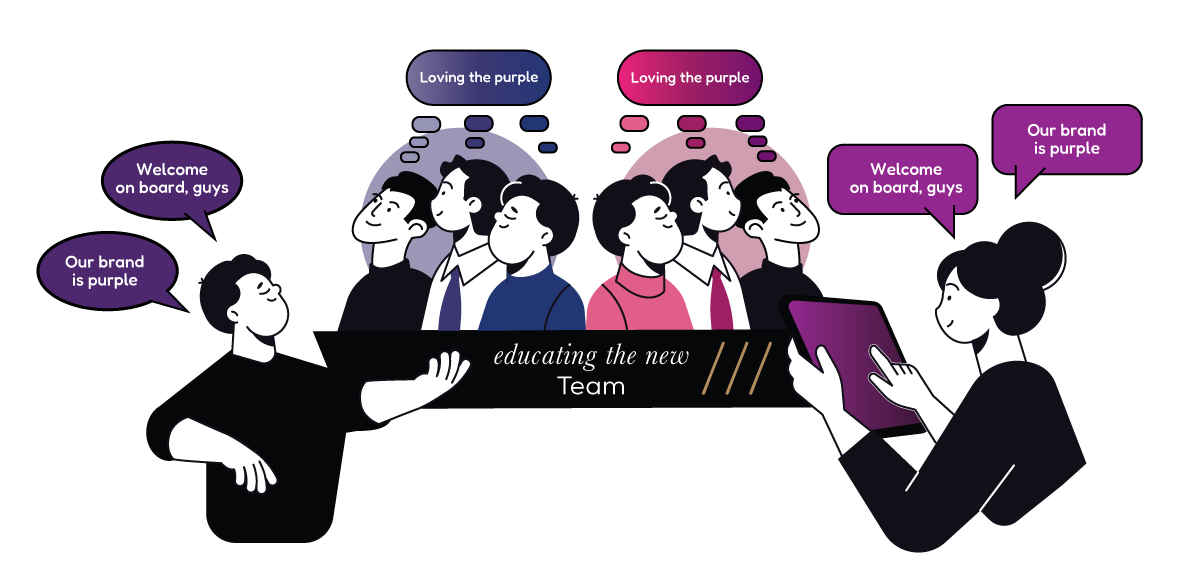
Here’s the thing – these business owners were initially operating on instinct and an innate sense of what’s ‘right’ for the brand. But because this was so natural to them, they never thought to articulate what the brand was all about – what it meant to them, and ultimately what they want it to mean to the people they hope to attract. So, when they began to hire people, they were not able to instil the brands values, personality, and heart into the minds of their team.

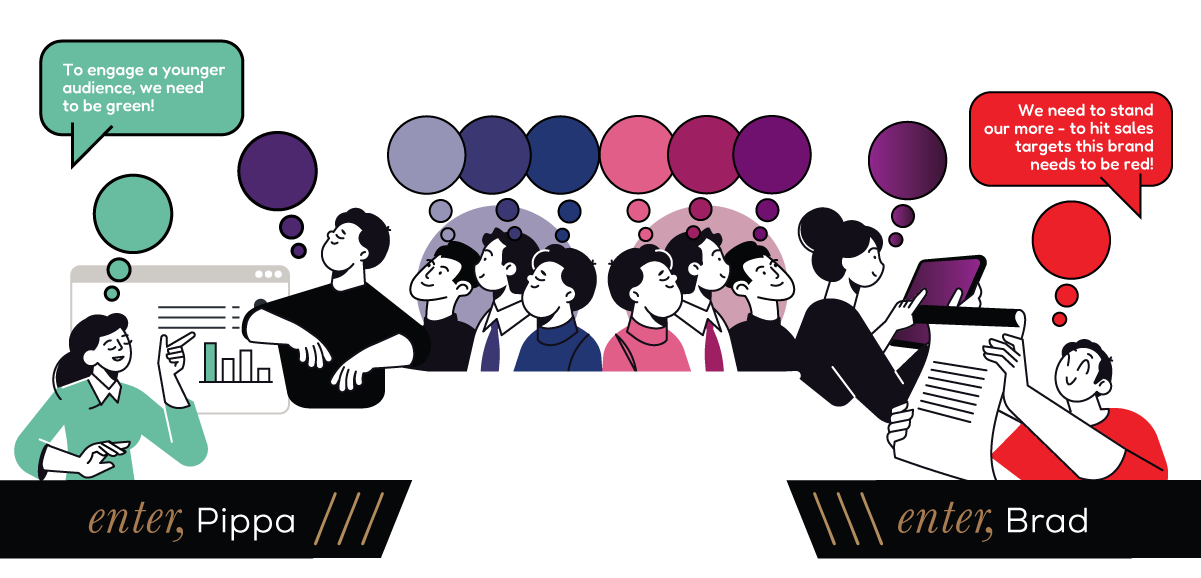
Ditto with partners and suppliers. Each party was left to draw their own conclusions, which would inevitably differ from theirs – and each other’s. Even with every individual working with the very best interest of the brand in mind, friction begins to creep in and confusion takes over. If the team and partners are confused, the customers have no chance!

Frustrated business owners might, in this instance seek help from external marketing agencies. I have one such example, where the owner engaged a PR agency, a social media agency, and a web agency, in the hope they would collectively steer the brand in the right direction. But the same issue applies – my client was not able to effectively articulate the brand to any of these agencies, so they all created their own vision from which to launch their campaigns / projects. The problem was exacerbated as the agencies were not collaborative – each one competitively vying for expanded scope from one or both of their fellow agencies. The result was a confusing mass of mixed messaging and brand image, which took months to unravel.

As a side note; creative / marketing agencies can be hard to manage. If you are not crystal clear on exactly what you want from them, you can find yourself being sold whatever they are best at doing – not what you actually need. And if you are not crystal clear on your Brand DNA, they will assume one for you, often with little consultation. It’s critical to build your brand vision and detailed guidelines before engaging external agencies, so you can give them an unquestionably clear brief. Before launching Velvet Creative, I spent a lifetime managing agencies, and for the reasons noted above, once we have created and established a full Brand DNA for our clients, we continue to act as their brand guardian, which may include the direction and management of their marketing agencies).

If any of the above resonates with you and you’re ready to work on your brand, it can be difficult to know where to start? Here’s what I’d recommend:

  • Set at least one day aside and get away from the office and any distractions.

  • Enlist the help of some people you trust, who are most aligned with your thinking – around 6 people is a good number.

  • Take a few pads of A1 sized post it sheets and fix them to the walls around the room so you can apply notes in a number of important categories, then start brainstorming and assign a scribe to commit all your blue-sky ideas onto the sheets.

  • Set some headings to brainstorm – who we are (really, deeply), what we do (emotionally) how we make people feel, our brand values (please, please, please, avoid words like ‘quality’ and phrases like ‘great-service’ – nothing generic – your values should be truly defining and explicitly distinguish it from competitors), cultural values (think more internally, as opposed to brand values, which are more consumer-facing), our brand personality (how you are, your style, your way of being), our tone-of-voice (your communication style and language). There’s more, but these are a great starting point, and you can add some headings of your own that are important to you.


Note: It can feel a bit awkward when you first start brainstorming, so start with something easy, and you’ll be amazed what gems people come out with once the group warms up. Just be patient, and if you need a second day, that works too – it will be worth the investment.


Second note: This is a highly emotive process, so put your logical, business brain aside for the day and just do it from the heart – you won’t go far wrong. It can be easy to revert to commercial, business/process, or data-driven thinking but save that for later, once you have a cohesive brand to guide you. And remember that every single buying decision is an emotional one, so open up and connect with your feelings for this exercise.


Once complete get your raw notes into a document and begin crafting them into something meaningful. You may need the help of a good wordsmith for this. Then you can begin curating your visual image brief, but that might be a whole other article, and this one is already longer than I anticipated.


It all feels a little too daunting, I’d love to help, so feel free to reach out any time.

In Summary…

 Once your brand is explicitly defined, you’ll find:


Your messaging aligns

Your decisions come easier

Your customers understand faster

Your confidence is palpable

Your voice is unmistakable

Your values are integrated

Your path is clear

Your image becomes memorable

And your brand becomes a magnet for your desired audience.


Ultimately the result of a clear brand strategy, DNA, and creative expression is authenticity and trust – the true foundations of a successful brand. These cannot be built through persuasion but through clarity, congruence, and consistency - and the quiet confidence of knowing exactly who you are.


This is how you build what is known as Brand Love and Loyalty Without Reason.

The Painter’s House

The age-old marketing problem of the painter’s house.

OK, here we go – it’s only taken me almost 15 years to get here, but I am about to embark on my first marketing post! Be gentle with me now – though marketing and design is my craft, indeed, my livelihood, I find it far easier to write about shiny things like shops, hence the slightly more populated retail blog.

But bear with me, and I’ll try to make it interesting.

This very intro describes the age-old problem of the painter’s house. I can sit with any business owner - or even simply look at a business objectively without any inside knowledge and instinctively know how they could improve their presence and attract the audience they are looking for. Doing that for my own business is spectacularly difficult.

One of the services we’ve been building lately is the writing, design, and issuing of EDMs (E-Direct Mailshots) or Newsletters, (as they are often unimaginably named) – a moniker that makes them sound so dull it’s no surprise business owners invariably decide not to bother.

In my humble opinion, this is a huge mistake.

I’ll explain in more detail, but back for a minute to the concept of the painter’s house. I attend a business owners’ Mastermind every month, where a members discuss business topics and challenges and gain advice from the collective. As I posed the question of how I might promote Velvet Creative’s EDM service, it hit me like a train. I don’t actually issue one for my own business! Why not? Because my clients are my priority? Because I don’t have the time? Because…… I must admit, I ran out of excuses. Why don’t I communicate with my clients and contacts on a regular basis? And more importantly, wouldn’t doing so be a perfect demonstration of our service and skills in this field? Of course it would.

Well, the communication is now actually in existence – in fact, by the time you read this post, it will likely be because you clicked on the link in our very first EDM.

Thank you, by the way, for opening, and for clicking through. Your attention is greatly appreciated, and I hope you find it useful.

So now I have you here, why not stick around for a while, and listen to me extol the virtues of communicating with your audience on a regular basis.


Let’s start with all the reasons clients and prospects are resistant to sending out regular EDMs:

1. “Nobody will read it.”

2. “I don’t want to be annoying by always sending people mailouts.”

3. “I wouldn’t know what to say.”

4. “I’ve tried that, and it didn’t work.”


There are more, but these four reasons cover most of the reluctance, so let’s address them one by one:

1. “Nobody will read it.”

This is likely based on the fact that most of us receive emails that don’t interest us on a daily basis. Here’s the thing – many of them are dull and lacklustre, they come from businesses you don’t really know or care about, and/or the frequency is overwhelming.

The important thing here is the quality of your database. All the businesses we work with have a really solid database of customers who are happy to hear from them and have an interest in the sender’s business / product / services, and like to feel connected to the brand. If your database is largely compiled from business cards you’ve collected, details you’ve gathered online, or a purchased list, your engagement is going to be much lower. That doesn’t necessarily mean it’s useless, but it’s going to be a very slow burn, and you’ll need to have a dazzling product or service to stimulate interest.


2. “I don’t want to be annoying by always sending people mailouts.”

Frequency is a consideration here – monthly is the most common for people starting out with communications, but it really depends on the business. For example, we started out issuing monthly EDMs for an independent retailer with a very loyal customer base. Oddly, though the open rate was good – between 35% and 42% (well above the average of 21.5%) and click-through between 8% and 12%, online sales only saw a slight uplift. But the in-store sales spiked significantly on the day of issue and for a couple of days after. Customers would call the store, comment on the EDM, and ask the owner to put things aside for them to pick up, or would just drop by.

Why? Because a business they like to buy from reminded them they were there. It’s really that simple.

If you have a strong customer base, you’re not going to annoy them. They are always welcome to unsubscribe, and a few will, but what’s more likely is they just won’t open the mailer if they don’t have the time, or the headline doesn’t grab them. But here’s the thing – sometimes, your EDM will land when they do have the time to open it, or maybe they’ve been thinking about a need and meaning to do something about it, and that communication brings your business right back on their radar. What you’re really doing is keeping your brand top of mind, so when recipients are ready to engage, you are the one they reach out to. In the absence of regular communication, you risk losing that business to someone who is communicating. Don’t let them steal your lunch!

That retailer, by the way, increased EDMs to fortnightly, then weekly, then twice-weekly, and saw little drop-off in terms of ‘unsubscribes’, but kept sales flowing at a higher level on a continual basis. Customers were in-store more often, and relationships became even stronger.


3. “I wouldn’t know what to say!”

That’s an easy one – you have a lot to talk about that will interest people. It’s important to create a strategy (nothing major – just an outline of what you want to achieve, and key messages you want to get across). Then create a rolling 6-month plan of communication topics / promotions / features / etc., etc. This is something we spend time with clients creating up-front, which considers the timing of activities or services in the business, seasonal influences, brand / cultural messages, stories and achievements, and new product or service launches, for example). If a marketing plan exists, we take the lead from that schedule, and if not, the EDM plan can also guide other marketing activity, such as social media and website features, to integrate and augment your communications activity.

One client of ours understands the importance of staying close to her customers but doesn’t feel comfortable talking about her business all the time or being seen to be ‘selling’ her services. Instead, we focus the attention on her clients. Each mail-out leads with a spotlight interview with the owner of the featured business. This has the added benefit of the featured business owner sharing the communication with their own contacts, extending reach. It builds further loyalty, communicates to the database the quality of businesses the company services, and highlights services they may not be aware of. Not to mention, the client in the spotlight is generally highly complimentary of our client and the services they provide them with.

Win : win!

We supplement this with monthly tips that readers can implement themselves, and reminders of key activities on the calendar they need to be aware of.

Again, it’s all about creating a communication strategy that works for you and your business.


4. “I’ve tried that and it didn’t work”

There are so many reasons campaigns don’t work. Marketing is no magic bullet, and trial and error is part of the process. What works for one business has little impact for another. Your business, your audience, and your communication style is unique. And it may take a little time to find your groove, but it’s worth the persistence.

Another reason business owners feel that EDMs didn’t work for them is that they were promised the earth by lead generation companies, gave it a few months, and felt cheated when the enquiries didn’t come flooding in.

In my opinion, email marketing just doesn’t work that way. It’s a slow burn, and back to my point in resistance statement #2, its main objective is to keep you in the frame, ensure your clients don’t forget about you, and make it easy for them to reconnect when they are ready to buy.

A tradie client of ours, with a strong database, routinely enjoys an open rate above 50%. Do they get masses of leads? Not really, but they do secure one or two jobs following every mail-out - often sizeable jobs. Simply because the topic of the month has reached someone who was thinking about that very thing, and it was the easiest thing in the world to click the BOOK NOW button or click on the phone number to call. We made life easy for those clients and they were delighted. If they hadn’t heard from the business in years, it would be easy to forget them and look for someone new. These communications more than pay for themselves, and more importantly, they aid customer retention by keeping them close.


Here's an example I often use.

A few years ago, a friend came to visit. We went on a mini cruise to Tasmania with P&O. It was fun. Being on their database, I began to receive emails a few times a week. I had no plans to book another cruise, but I didn’t unsubscribe because I thought it might be nice to take the family on something similar sometime. So, the emails kept coming and I rarely opened them, but occasionally something piqued my interest, and I’d click thorough. A couple of years later, the same friend came over again and suggested we book another cruise. “Leave it with me” I volunteered, as I knew the regular emails would remind me. And they did. But often they would drop when I was too busy to look or take any kind of action. Sometimes I might click through to prompt me later in the day, but somehow, manage to close the website window and then forget about it for a while. This pattern repeated for some time, but eventually, an EDM came through, when I did have the time, I did click through, and I did book that cruise. My point is, that if P&O hadn’t kept reminding me of their existence, I might instead have searched and found something similar from a competitor or booked a different kind of break entirely. Possibly with a business that was reaching out to me on a regular basis.


So, dear reader, I have battled my demons and picked up that metaphorical paintbrush. I’m going to be realistic, so I’ve set myself the objective of writing one post every month and sending out one EDM.


What will you do to keep your customers close?

If you’re interested in exploring EDMs for your business, check out our packages…

http://www.creativemarketingsydney.com.au/sme-marketing


Feel free to reach out any time if you need help – or would just like to chat.